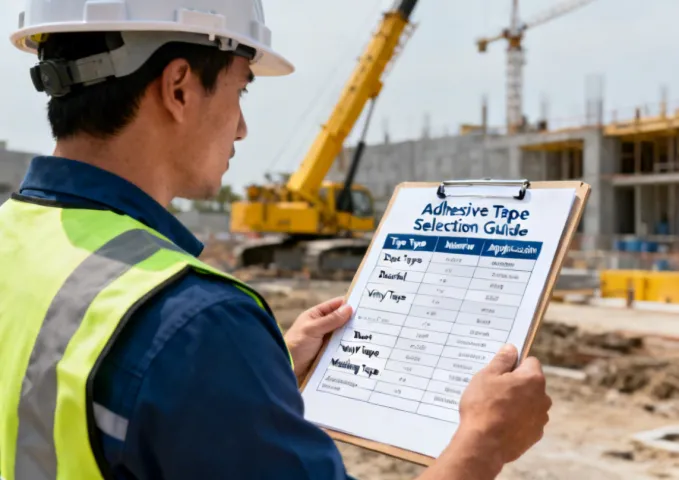
Use this guide to match your job conditions — surface type, temperature, load, and code requirements — to the right IPG tape product. Or talk to a specialist directly.
The biggest tape failures we see aren't about quality — they're about fit. Using a cloth-backed duct tape where a UL 181 foil tape is code-required, or applying masking tape to a low-energy surface without the right primer, will fail regardless of the tape brand.
This guide is organized by application scenario — not by product line — so you start with your job condition and end with the right product specification.
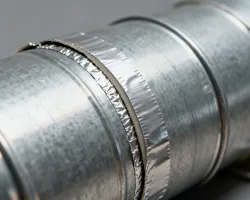
Duct connections in conditioned space or mechanical rooms require UL 181-listed products under the International Mechanical Code. Temperature range at the duct surface typically runs 60°F to 180°F in normal operation. Acrylic-adhesive foil tape outperforms rubber-adhesive alternatives at sustained elevated temperatures by resisting adhesive cold flow.
Recommended: IPG Aluminum Foil Tape (UL 181B-FX), IPG Flex Duct Tape (UL 181B-M)
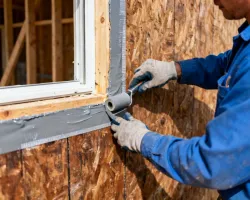
Flashing tape must adhere to OSB, plywood, concrete masonry units, and structural steel — all in outdoor conditions before building enclosure. The tape must survive from 30 to 180 days of UV exposure (depending on construction schedule) without delaminating or losing edge seal. ICC AC-148 compliance is required by most residential and commercial building codes.
Recommended: IPG FlashGuard Window Flashing Tape, IPG Sill Plate Flashing Tape
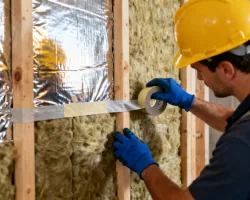
Foil and polyethylene vapor retarder facings are inherently low-surface-energy substrates. Standard pressure-sensitive tapes designed for corrugated or paper surfaces will fail on clean foil within weeks due to adhesive-to-substrate incompatibility. A specially formulated acrylic system with surface primers for foil is required for a durable, code-compliant vapor seal at butt joints and penetrations.
Recommended: IPG Foil Insulation Facing Tape, IPG Vapor Barrier Tape
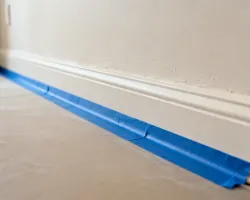
Masking tape grade selection depends on dwell time (how long the tape stays on before removal) and surface energy. For standard interior applications with same-day removal, IPG General Purpose Masking performs reliably. For exterior work or when the masked surface will be exposed to sun, IPG's UV-Resistant 14-Day and 30-Day grades prevent adhesive transfer without heating the surface before removal.
Recommended: IPG 14-Day UV Masking Tape, IPG 30-Day Masking Tape (Exterior)
Water-activated tape (WAT) is the highest-security box sealing method available. It penetrates the top layer of corrugated fibers and creates a permanent fiber-bonded seal — you cannot remove and replace it without obvious visible damage. For operations requiring CTPAT, PCI-DSS, or e-commerce platform seal-integrity compliance, WAT has become the standard. IPG supports WAT programs with machine selection, operator training, and preventive maintenance programs.
Recommended: IPG Reinforced WAT, IPG Standard WAT, IPG WAT Tape Machines
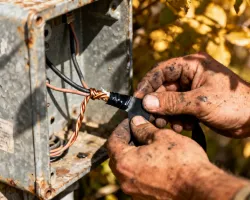
Electrical tape used for wire insulation and splice protection must be UL 510-recognized and carry a minimum 600V voltage rating for commercial and industrial work. The vinyl compound must resist plasticizer migration — a common failure mode where the tape becomes brittle or the adhesive migrates onto the conductor after 5–10 years of service life. For outdoor and high-moisture environments, self-amalgamating rubber tape provides superior moisture exclusion where PVC tape would delaminate.
Recommended: IPG Pro Electrical Tape (UL 510), IPG Self-Fusing Silicone Tape
Our application specialists review over 150 tape selection inquiries per week. Send us a description of your surface, environment, and any applicable code requirements — we typically respond with a product recommendation and relevant technical data sheet within one business day.